|
At confab of African intellectuals resident in US:
Dr Christopher Fomunyoh makes rallying call against second scramble for
Africa
- Urges African Diaspora to collectively activate resistance
- Insists gains of hard-fought democracy & independence must be protected
- Warns continent negatively impacted by poor leadership that prolongs
hardship, suffering
- Calls on African Diaspora to intensify advocacy for good governance,
democracy, accountability
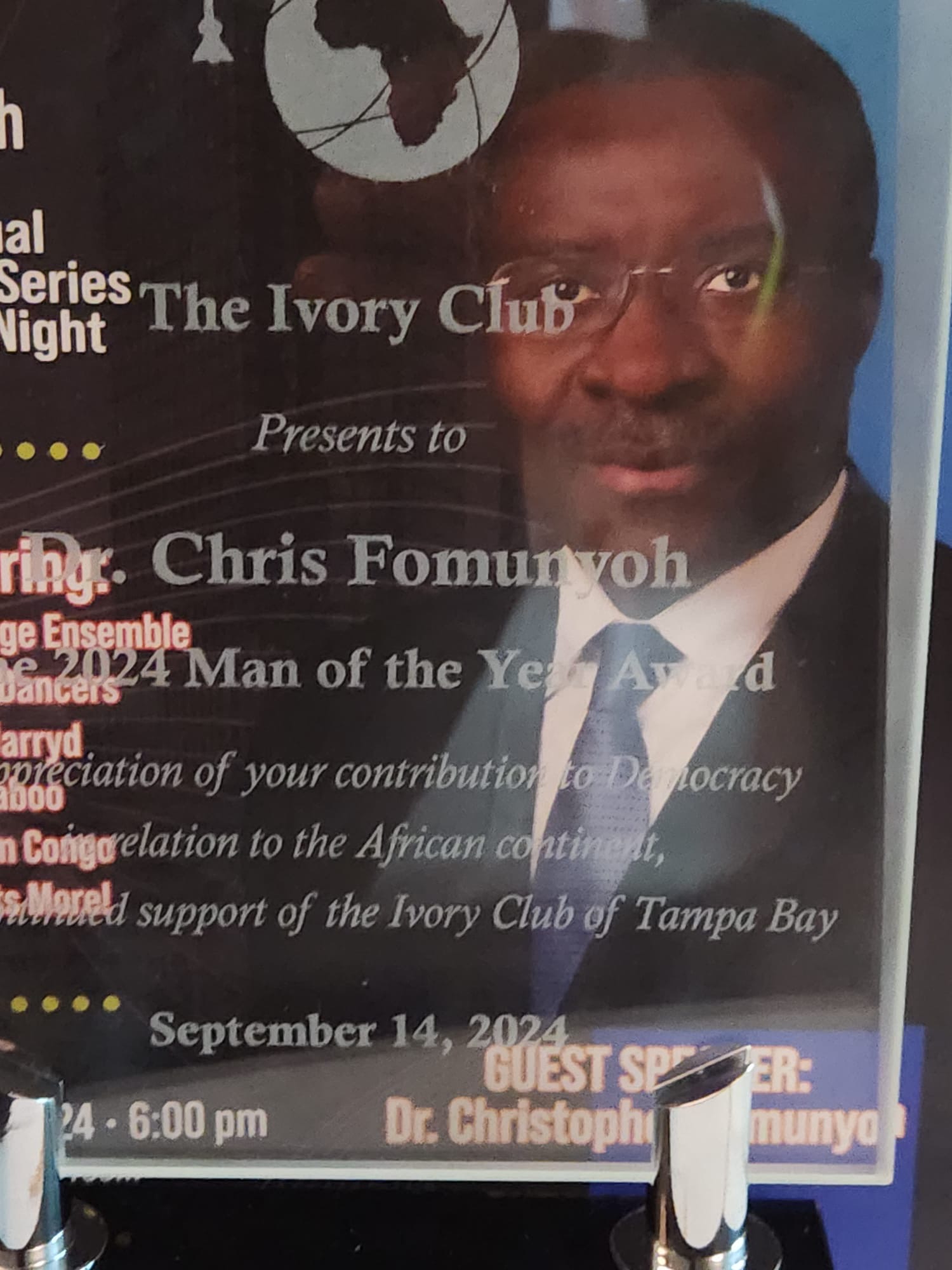
Erudite global good governance icon and expert on African democracy, Dr
Christopher Fomunyoh, has advanced strong arguments against the second scramble
for Africa. The Senior Associate and Regional Director for West and Central
Africa at the United States, US-based National Democratic Institute, NDI, voiced
the critical points recently.
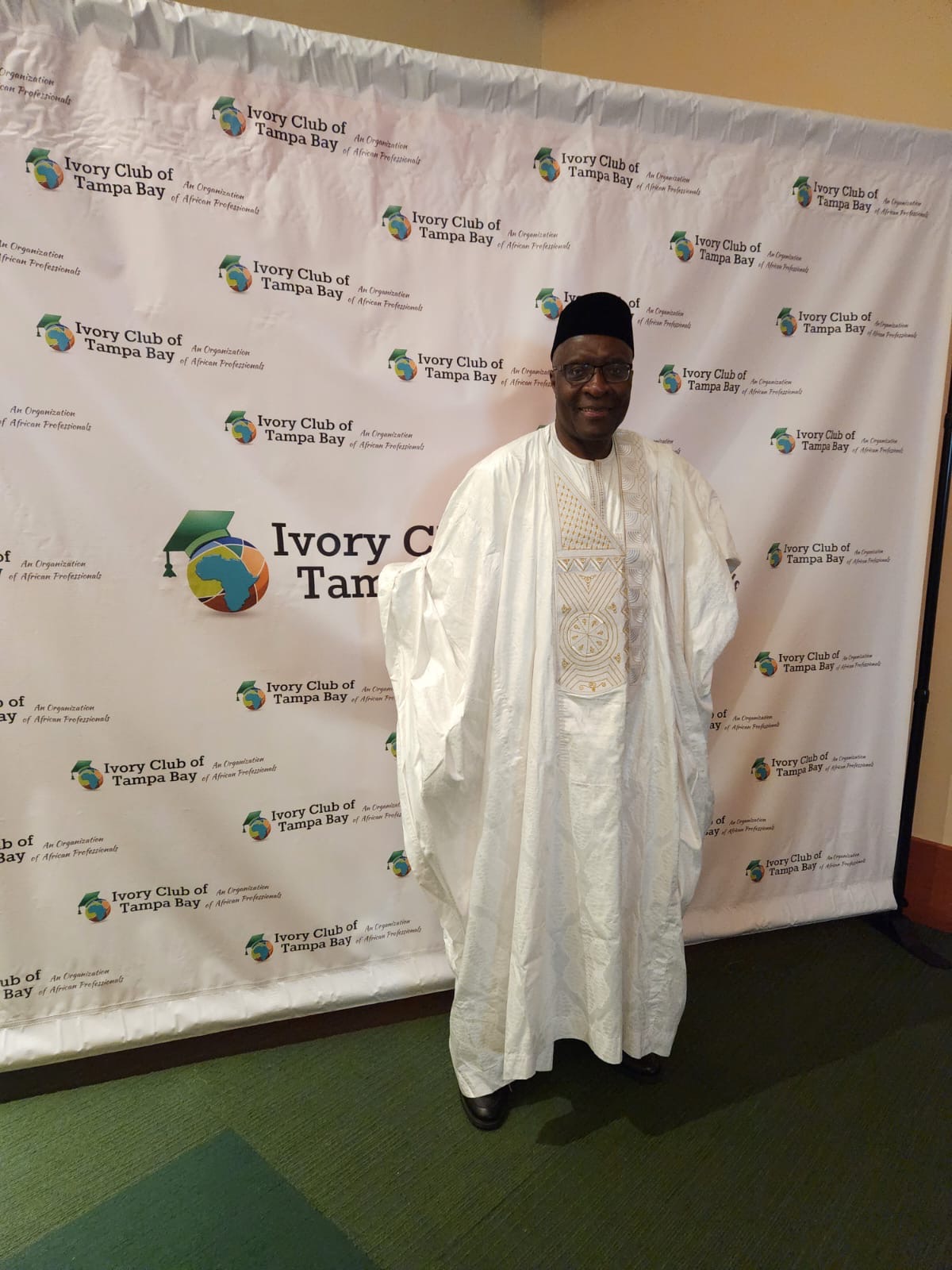
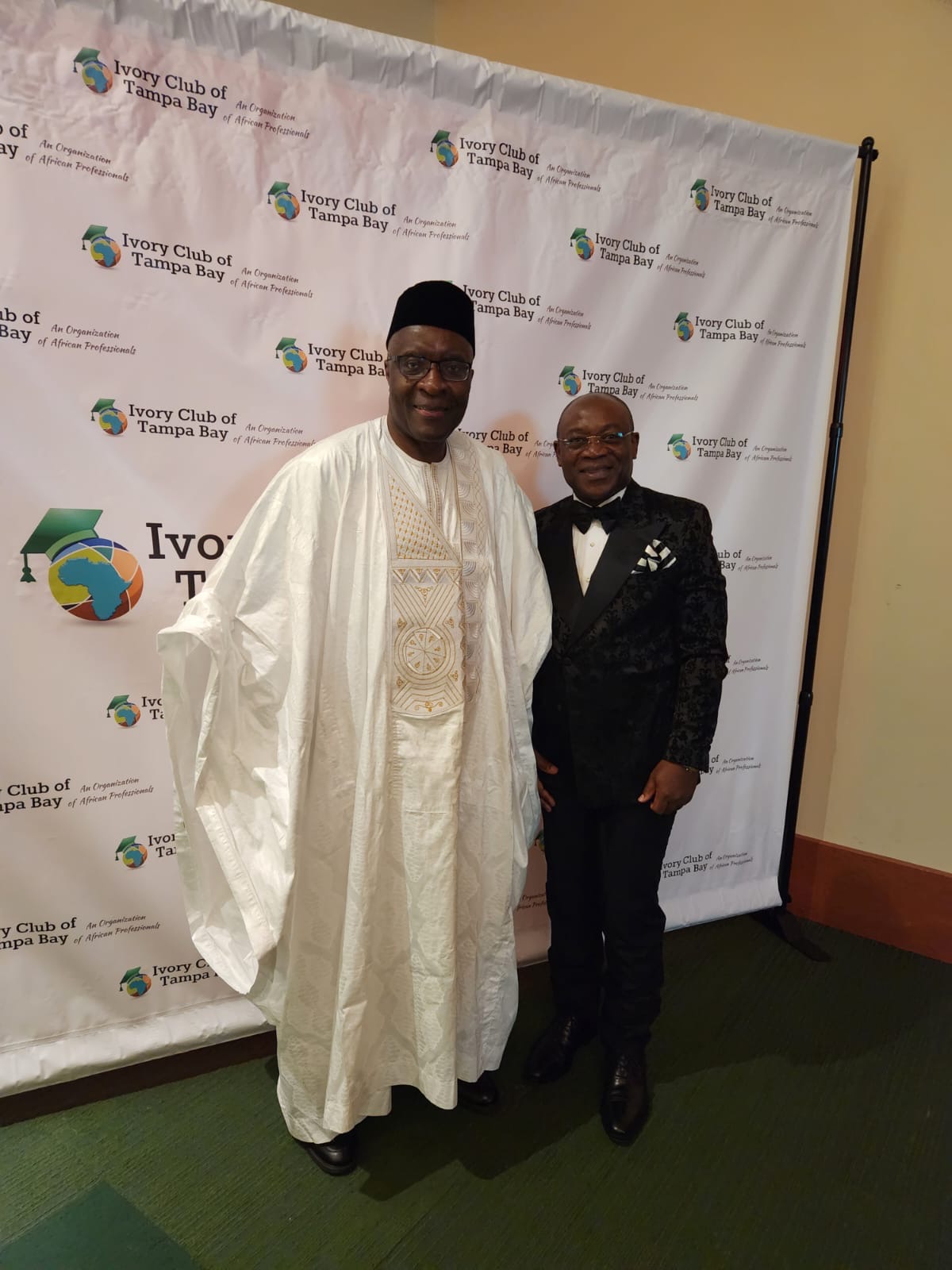
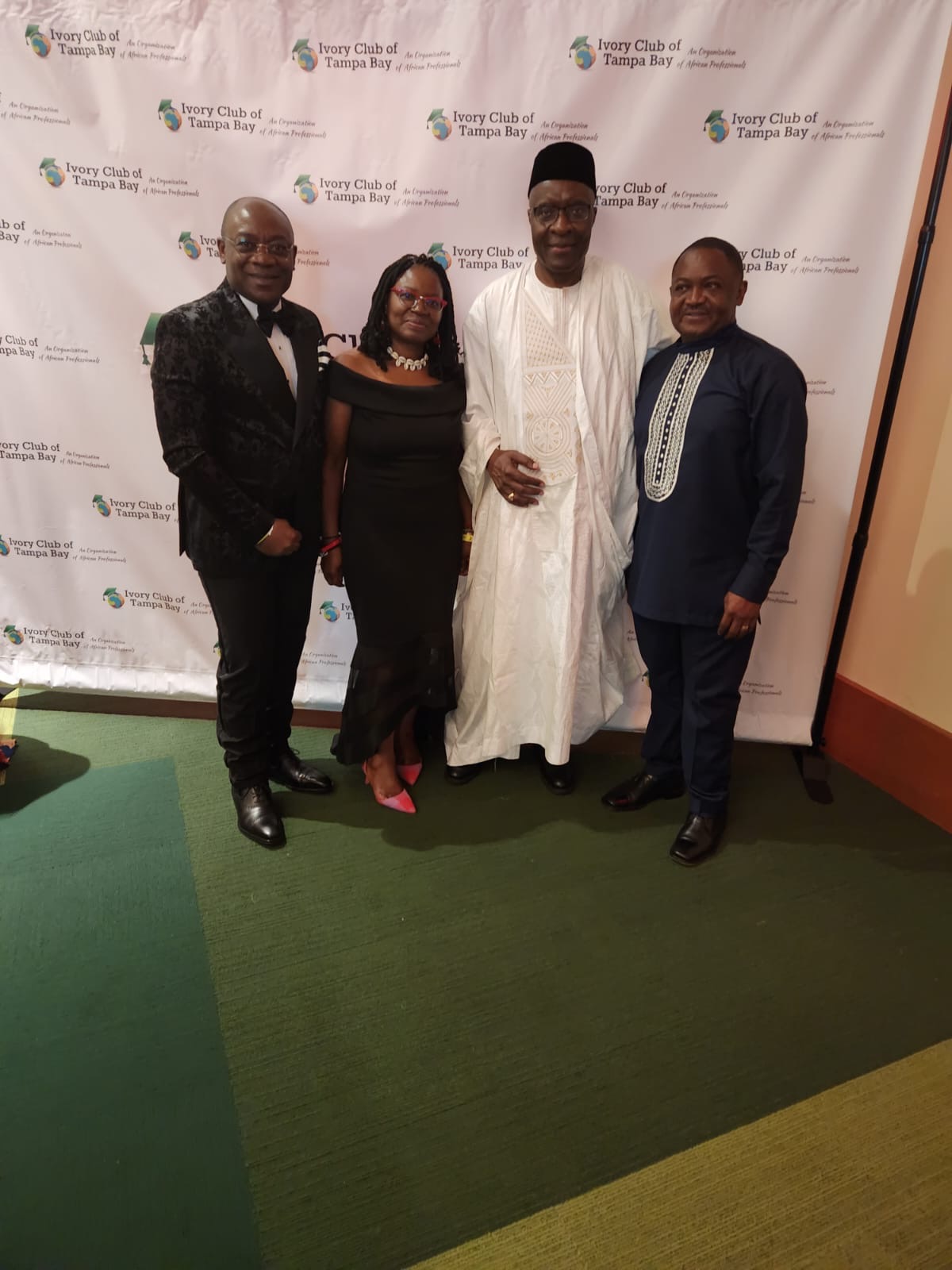
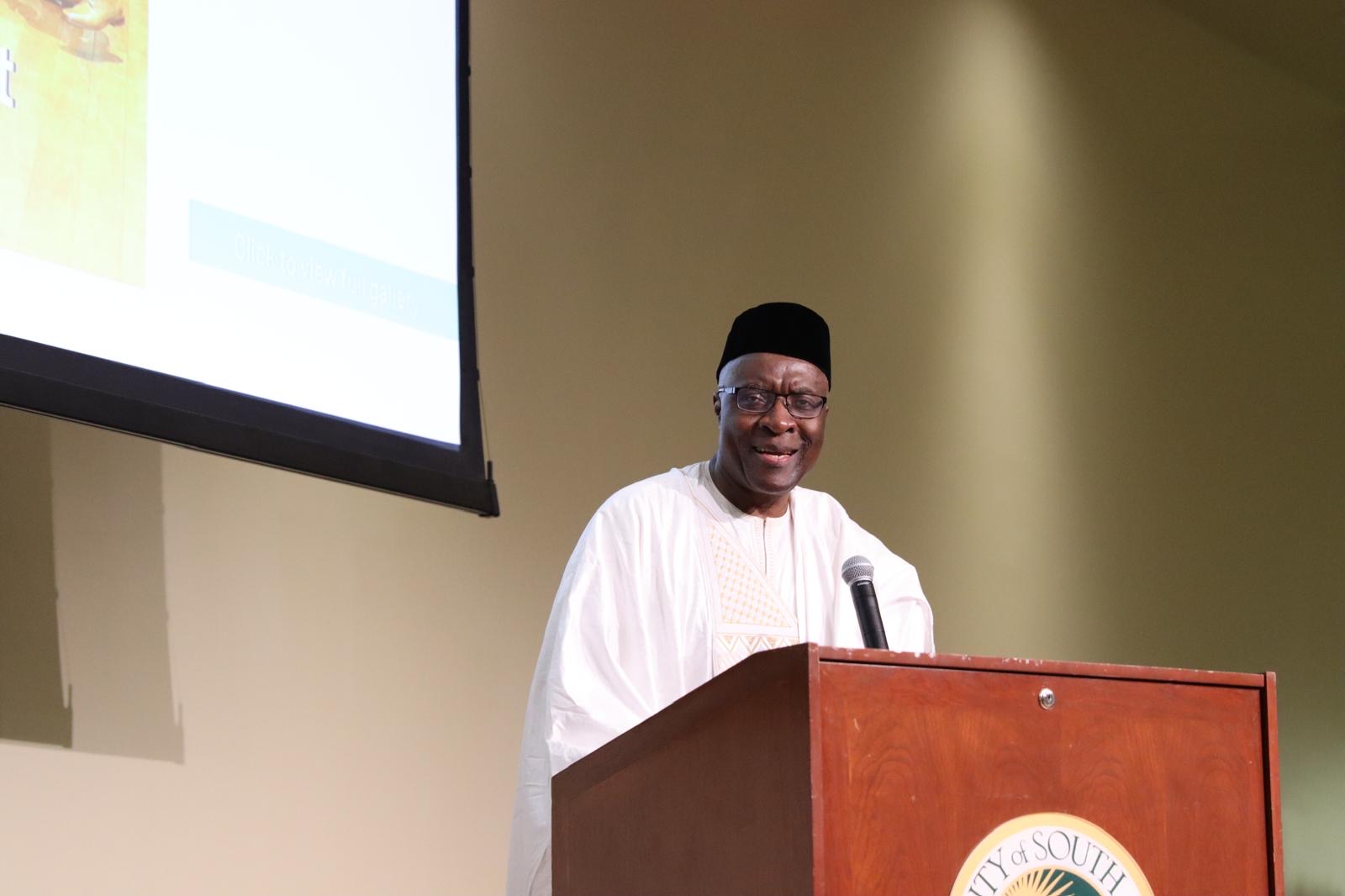
The globally-respected and accomplished US-based Cameroonian intellectual,
insisted that a strong African Diaspora is critical for the continent's global
standing and future. He advanced the strong case for the continent as Keynote
Speaker at the 18th Annual Lecture Series and Gala Night of the Ivory
Club of Tampa. The event was hosted by the Ivory Club of Tampa, Florida, a
non-profit association of African professionals, dedicated to supporting
educational and humanitarian causes in Africa, as well as within
African-American communities in the United States of America, USA.
Dr Fomunyoh's keynote lecture was titled: "African Diaspora in a Multi-Polar
21st Century". The gala night and speaking event were hosted on the
campus of the University of Southern Florida, USA. The democratisation and good
governance expert, in his lecture, urged African Diaspora to collectively
activate their resistance as the much-needed firewall or buffer to stop the
second scramble for Africa.
Dr Fomunyoh, who has organised and advised international election observation
missions in many countries, insisted that gains of hard-fought democracy and
independence of African countries must be protected. He warned that the is
continent negatively impacted by poor leadership that prolongs hardship,
suffering and called on Diaspora Africa to intensify advocacy for good
governance, democracy, accountability among others.
The event, it should be noted, was heavily attended by elected officials in the
State, private sector representatives, philanthropists and huge members of the
African Diaspora from many different countries. It also featured a powerful
display of African culture with traditional dances from Guinea, Côte
d'Ivoire and East Africa
Full text of Dr Fomunyoh's keynote address
Honored guests,
Distinguished Ladies and Gentlemen.
Thank you for this unique opportunity to keynote your highly valued annual
Speakers' series and an evening in Africa — what a splendid occasion; what
a vivid demonstration of our cultural diversity and the richness of our
collective efforts in favor of good causes on the continent and to people of
African descent here in the United Staes. It is truly an honor and a pleasure to
be here this evening.
I would like to give a special 'shout out' to members of the Executive Committee
of the Ivory Club for determining that we devote this year's keynote to the
"African Diaspora in a Multi-Polar 21st Century". The theme is
topical and the moment is right!
For students of world affairs, it has been exhilarating to watch the arc of
global geopolitics in the past four decades. Many of you may remember the
activism former Polish president Lech Walesa at the time when he led the
Solidarity Movement in Gdansk, Poland; the collapse of the Soviet Union and end
of the Cold War, and of course, the collapse of the Berlin wall and
reunification of Germany.
In Africa, what political scientists describe as the 'third wave of
democratization' saw Namibia obtain its independence in 1989, and the
dismantling of apartheid in 1991/92 and the release of Nelson Mandela who in
1994, got elected the first president of a new, free and democratic South
Africa.
We also witnessed the first 'National Conference' in Benin Republic in 1990, that
brought an end to the Marxist-Leninist regime of then president Mathieu Kerekou.
Significantly, the Benin conference spurred a series of national conferences in
countries such as Congo Brazzaville, Mali, Togo, Zaire (or today's Democratic
Republic of Congo) and across much of Francophone Africa, resulting in the fall
of many military regimes and pro-soviet one party states, and the expansion of
political space. Democratic principles of political pluralism and rule of law,
human rights, civic engagement, media rights, and inclusion gained prominence.
There's no doubt that by the last decade of the past century, the West had won
the cold war and appeared poised to stay uncontested at the helm of a unipolar
universe. Many around the world began to talk about 'globalization' and
brilliant political thinkers like Francis Fukuyama wrote "The End of History and
the Last man" in which he posited that 'history should be viewed as an
evolutionary process, and liberal democracy is [had become] the final form
of government for all nations'.
Fukuyama and others professed that with the ascendancy of Western liberal
democracy, humanity had reached not just the passing of a particular period of
post-war history, but the end of history as such: That is, "the end-point of
mankind's ideological evolution and the universalization of Western liberal
democracy as the final form of human government."
Well, fast forward to this day, and the world is not the unipolar entity some
dreamed about and others feared. The world has become, in the words of many
global thinkers and analysts, a multipolar universe, although one must hasten to
clarify that the theory is not that all major powers are equally powerful
economically or militarily, but rather that a number of world powers are today
able to project and exert influence beyond their national borders. For our
continent, Africa, that surge of superpower influence and competition has
generated concerns in some quarters about the advent of a second "scramble for
Africa,"
So, besides the United States, there's China which, with its 1.4 billion
inhabitants, remains Africa's largest trading partner for 15 years in a row, a
position once occupied by the European Union countries. Then there is Russia,
with its military might and a dangerous opportunism that seeks to ride a growing
wave of anti-western sentiment among African youth even at the expense of many
aspects of international law. Its leader seems determined to reconstitute at
least some version of the Soviet empire whose demise he apparently regrets.
Other international actors deeply engaged in Africa include India, Brazil,
Turkey, the United Arab Emirates, Japan and South Korea. It is therefore no
surprise to see the multiplicity of high visibility Heads of State summits
hosted by these countries and their African counterparts in an effort to enhance
economic, diplomatic and political ties. In short: African votes count in
international arenas such as the United Nations; African raw materials count
even more.
Yet, as the full time afro-optimist that I am, I can confidently state that the
dreaded second 'scramble for Africa' will not happen - that is, if we of the
African Diaspora were to collectively activate our resistance as the much needed
firewall or buffer to such a dreadful repeat of history. Today, unlike during
the Berlin conference of 1884, the African Diaspora is present on all seven
continents of the globe. According to well documented sources, the population of
the African Diaspora is estimated at 350 million worldwide, placing it right
after China and India - and before the United States, Indonesia and Brazil
— if it were a country of its own.
Speaking to the African Diaspora community for me is almost like preaching to the
pastor or singing to the choir because you all know the verses and chapters so
well and, in many cases, are already doing the needful. Yet, the reaffirmation
is important. For example, many (if not all) of you are shareholders in the
massive enterprise of remittances which, according to World Bank studies on
Migration and Development, surpass $100 billion annually for Africa; an amount
that is more than Overall Development Assistance (ODA) and Foreign Direct
Investment (FDI). One can only wish that the shareholders that we all are, had
more say in how the enterprise is run and how the dividends that flow from the
investment are distributed.
Along those lines, and to conclude, I would like to make three recommendations on
how the African Diaspora could increase its relevance in the current multipolar
world:
I) The Diaspora must scale up its role on African Agency.
In my mind, part of the world's restiveness about Africa stems from a strong
desire to engage in a global context in which the African state no longer has
monopoly in determining perceptions of the continent or its reputation and
credibility in the international arena. I would therefore propose that rather
than be timid or minimalist in our engagement and approaches, we of the Diaspora
must step forward and aggregate our groupings and networks, and with
determination and greater intentionality, more aggressively speak up for and on
behalf of the continent. The continent needs more voices to speak on its behalf
internationally, and the Diaspora has a unique appreciation of the
multi-dimensional spaces in which these conversations do occur.
The Diaspora possesses the expertise and institutional familiarity with public
and private sector processes on both sides of the Atlantic and Indian Oceans.
And, lest we forget, remittances do not only have to be financial; they can also
be of a social nature to include the ideas, knowledge, norms and practices, and
the social capital that members of the Diaspora regularly transfer, albeit
informally, to their respective communities and countries of origin.
II) The Diaspora must lead in assisting continental organizations such as the
African Union and the Regional Economic Communities (RECs) operationalize the
lofty and progressive instruments adopted by these entities.
While the continent has adopted quite progressive and even futuristic legal
instruments such as the African Union charter on Democracy, Elections and
Governance, and the African Peer Review Mechanism (APRM) to sustain its growth,
prosperity and development, the ineffective implementation of these instruments
undermines efforts at accountability, good governance, creativity and
entrepreneurship among our fellow citizens.
The African Union recognizes the Diaspora as the sixth region (alongside the
five regional economic communities, and has a bureaucratic entry point for
engagement through a structure known as the 'African Union Sixth Region
Global' that is "dedicated to representing and advocating for the
African Diaspora worldwide"). To be truly impactful in today's global
content, that entity and others within our continental bodies must intensify
their engagements in order to become forward leaning and more operational and
visible. Such entities must also serve as two-way or multiple track platforms
that are open and receptive to Diaspora input and action.
III) The Diaspora must intensify its advocacy for good governance and make
the necessary linkages with citizen engagement, accountability and development.
This era of renewed superpower competition across Africa and other parts of the
world is fraught with excessive misinformation and disinformation, and the
Diaspora cannot afford to stand idly by while the gains of our hard fought
independence and recent democratization efforts are being undermined.
- We cannot and must not stand by while the continent and our individual
countries are being negatively impacted by poor leadership with no prospects
of success.
- We cannot, and must not stand by while a wave of toxic disinformation is
descended upon the continent that seeks not to amplify the positive values
and assets that we possess as a people, but rather is a throwback to
antiquated models that have failed us in the past and can only prolong the
hardship and suffering of our people.
- Yes, we cannot and must not forget that among the Founding Fathers of
today's Africa were many that had served in the Diaspora and who from the
trenches or long distance made the case and put up the good fight for the
independence that our respective countries and the continent so cherish
today.
Many great African leaders at independence or in the pro-independence movement,
starting with Rudoulf Douala Manga Bell of Cameroon even before the second world
war cut their teeth in the diaspora. And later, others such as Kwame Nkrumah of
Ghana, Leopold Sedar Senghor of Senegal, Amical Cabral of Guinea Bissau and Cabo
Verde, Nnamdi Azikwe of Nigeria, Felix Houphouet Boigny of Côte d'Ivoire,
Tom Mboya of Kenya, to name a few, demonstrated their worth and prowess while in
the Diaspora or actively helping to mobilize it. Their calling and service at
the critical moment of independence for the continent must be replicated anew by
the Diaspora population of today. Collectively, we must step forward and rise to
the occasion as Africa stands in the crossroads of a multipolar world in the
21st century.
Thank you for your time and attention.
|