|
2025 Presidentials
Dr Fomunyoh makes fresh case for Anglophone president
Says having a native of either NW or SW as Head of State long
overdue, Urges CPDM to invest Anglophone as presidential candidate to
consolidate national unity, Reveals longstanding desire among
Francophones to have an Anglophone as Head of State, Insists burden of
ending crisis in English-speaking regions not on Anglophone
elite.
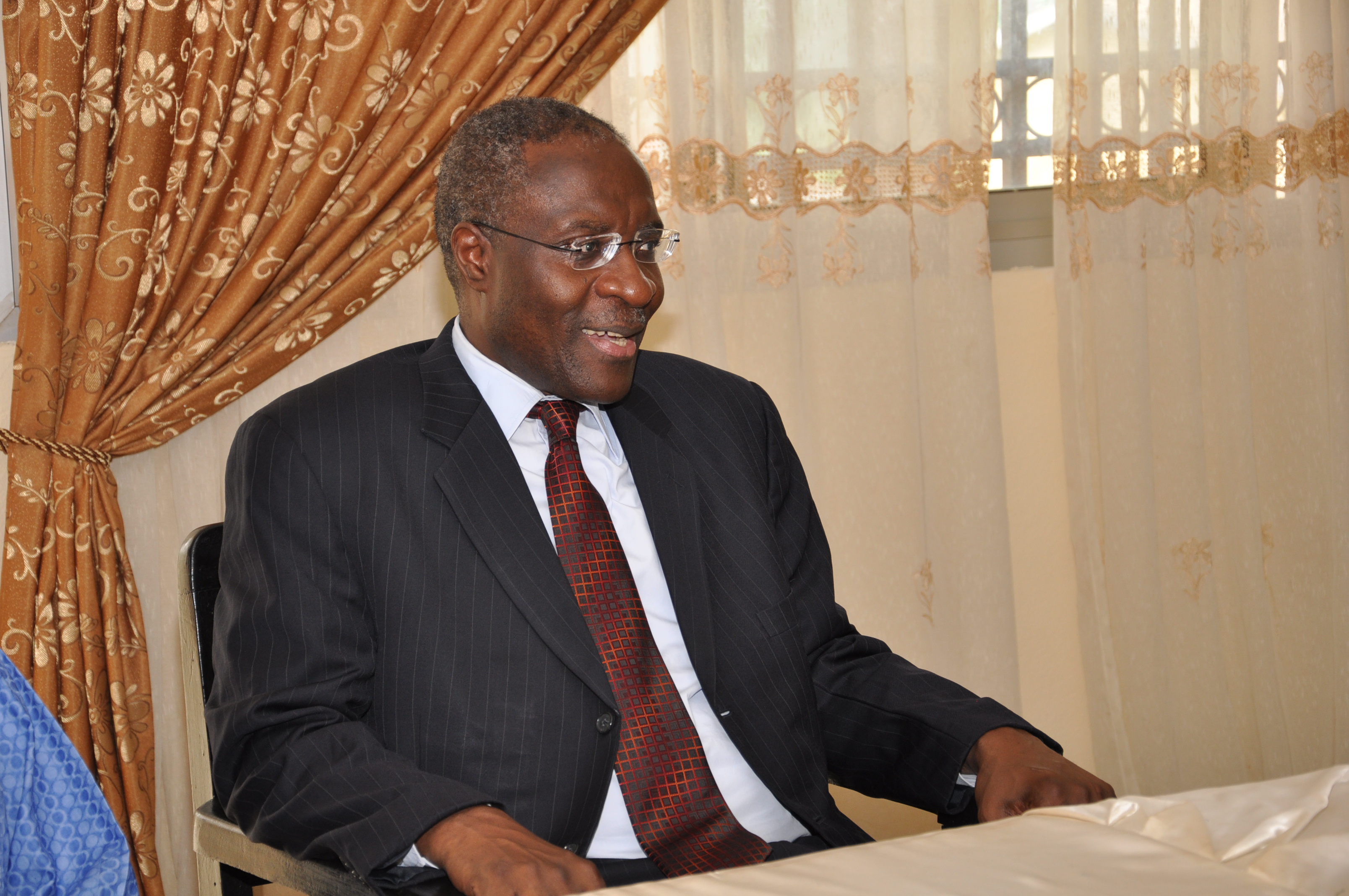
Erudite global good governance icon, Senior Associate and Regional Director for
West and Central Africa at the Washington-headquartered National Democratic
Institute, NDI, Dr Christopher Fomunyoh, has made fresh arguments for an
Anglophone to become Cameroon's next Head of State. Dr Fomunyoh's arguments are
in the content of a recent interview he granted Douala-based television station,
My Media Prime. In the exchange, the globally-respected Cameroonian, made an
overview of the historical mutations that have marked leadership at the highest
echelons of power in the country, insisting that it is more than ripe to give an
Anglophone the nation's top job. Showing a mastery of how the power structure of
the State has evolved, since the early days of reunification, to the
Ahidjo-presidency and Biya's era, Dr Fomunyoh dissected the inaccuracies that
have been a drawback to Cameroon's evolution. In all these decades, he
identifies the Anglophone question and now the Anglophone crisis, as perennial
issues of great concern; which he regrets those in leader-ship positions have
refused to face squarely.
Why an Anglophone Head of State?
According to Dr Fomunyoh, "it is more than ripe for an Anglophone to be the
President of Cameroon" . He backed his submission on grounds that: "An
Anglophone can fix this country. Not just because it is an Anglophone; not just
because our cultural upbringing has embedded in us certain values of fairness,
of justice, of equity and equilibrium vis-à-vis everyone but also because
it is someone who has the credentials and has proven his/her worth" . He added
that an Anglophone as Head of State, will also "be able to address the
grievances of Cameroonians across the board and be able to give citizens a sense
of belonging. It is that lack of sense of belonging that is stir- ring up the
conflict in the North West and South West Regions".
Francophone desire for Anglophone president
Having an indigene of either the North West or South West Regions as Head of
State, Dr Fomunyoh said, will be another major way of sending a message across
to citizens that all Cameroonians are equal. He quipped that "it is a way of
showing that every Cameroonian is a hundred percent a citizen of Cameroon...
there is no second-class citizen. If that is the case, then let's show it. If
the taste of the pudding is in the eating, as it is commonly said, then let's
see it happen in Cameroon" . The good governance advocate revisited what he said
has been a longstanding desire among Francophones to have an Anglophone as
Cameroon's 3rd Head of State. "We should also remember that deep down, there is
a fundamental reservoir of Francophone goodwill for an Anglophone President in
Cameroon, " Dr Fomunyoh stated. He recalled the assassination of Anglophone
politician, Zacharia Abendong, then Secretary General of John Ngu Foncha's
Kamerun National Democratic Party, KNDP, as having been linked to such
developments. "I don't know if your generation is familiar with Zacharia
Abendong? Zacharia Abendong, in the early 60s, was the Secretary General of
Foncha's KNDP. He was assassinated because he was mistaken for John Ngu Foncha.
It was an assassination that was aimed at John Ngu Foncha, " the NDI official
situated. Dr Fomunyoh added that Zacharia Abendong, was assassinated partly
"because a number of Francophones from the West and the Littoral Regions, when
Cameroon was going through the reunification process, had believed that there
will be a presidential election and Foncha would compete against Ahidjo and they
would want to make Foncha the President of Cameroon".
Going by Dr Fomunyoh, President Ahmadou Ahidjo was already facing disagreements,
"in the Republic of Cameroun, which had its independence before and where Ahidjo
was Head of State. Because this didn't happen, there was lingering frustration
with Foncha along those lines" . Citing the case of the late Ni John Fru Ndi at
the 1992 presidential election, he said, "for a man who did not speak a word in
French, look at the results that he obtained in the West and Littoral Regions
and other parts of the country!". On this score, Dr Fomunyoh underscored that:
"So Mathematically, you could say with the best of circum- stances and with the
enabling environment, it should be an easy win for an Anglophone whose
credentials are well recognized".
"CPDM should invest Anglophone presidential candidate"
On other possibilities of getting an Anglophone elect- ed to the office of
President of the Republic, Dr Fomunyoh said even the ruling Cameroon People's
Democratic Movement, CPDM, party can end the jinx. He said the "CPDM could even
have a primary within the party to have some of the Anglophones who are in the
party to put their hats in the ring and run for the nomination" . Such, he
enthused, "is even where you begin to see the recognition" , before asking: "Why
has the CPDM not thought about enabling some Anglophones, who are in that party
and who have also worked hard for the party... ?". "Why are they not being
recognised within the CPDM party? That is where you begin to show leadership and
then the rest can mobilise themselves, " Dr Fomunyoh expatiated. He was vehement
that: "When you genuinely want to see talent, you can see it wherever it is...
if you don't see it within the ruling party, it is not within the entire coun-
try that you are going to see it".
Burden of ending crisis in NW, SW not on Anglophone elite
On what Anglophone elite can do to end the chaos in the North West and South West
Regions, Dr Fomunyoh said: "In fairness to the elite from the North West and
South West Regions, they are themselves victims of the crisis. The grievances
are known and if they are assessed, there will be no need to say the burden of
end- ing the crisis rests with Anglophone elite" . The elite, he said, can help
in addressing the situation but need the right support and platform to descend
to the field. "They can help but you have to give them something to work with.
They can go back to their constituencies and say ' ...the reason I am asking you
to come out from wherever you are, is because there is genuine peace on the
table' ..., " Dr Fomunyoh opined. When a veritable platform is put in place, he
said, Anglophone elite can then tell the people that: "The grievances that you
have raised are being addressed in this way or that way. You have to give them
something to work with. If you don't give them something to work with, just
carrying the title of an elite will not suffice". He regretted that even
traditional rulers can't stay in their palaces "because they are being
persecuted". Anglophones, he reiterated, "are a decent people. We are a people
with dignity. We are a smart people; we don't deserve this. We want to compete
in the world... ".
Revisiting Anglophone frustration
In the course of his outing, Dr Fomunyoh touched on issues in decades- past, and
which are related to Anglophone frustration. The situation, he said, has left
even some Francophones worried. "You know John Ngu Foncha was an Anglophone
elite. The way he was treated is contained in the petition he wrote when he left
his political party. The late Hon S.T Muna was an Anglophone elite, the way he
felt when he left the Constitutional Review Commission and wrote about it, said
something about how he felt in this Republic, " the award-winning good
governance advocate declared. In the case of S.T Muna, he argued that: "If the
constitution had not been changed to make the Speaker of the National Assembly
the third personality and not the second, he would have succeeded President
Ahmadou Ahidjo, when he decided to quit power on November 4, 1982". He said even
Francophones "see that Anglophones know the micro aggression that is being
inflicted on the current Prime Minister, Head of Government and the way he is
being undermined by some of his ministers. Even fore-minded Francophones are
extremely upset... how do you expect Anglophones to feel?". Anglophone
grievances within Cameroon as a coun- try, he said, are not hidden. He cited
officials and top regime officials who have repeatedly spoken out about the
issue. He remarked that: "There are people who have come out. The former
Governor, David Abouem A Tchoyi, also former minister and former Secretary
General at the Presidency; the only Francophone who was Governor of the North
West and South West Regions. He has spoken out very clearly and openly about the
Anglophone Question" . When Ahmadou Ahidjo served as President of the Republic,
Dr Fomunyoh said, he set up a commission on the Anglophone issue, where
President Paul Biya, Abouem A Tchoyi and Prof Dorothy Njeuma were mem- bers of
the team. These individuals, he said, have been vocal about the issue, including
the former North West Governor, Abaka Ahamat, who has written extensively about
the problem. In the private sector, Dr Fomunyoh cited Protais Ayangma and other
well-meaning Francophones, who have talked about the Anglophone problem.
Maxcel Fokwen
|