|
A Powder Keg Waiting To Explode-Dr Chris Fomunyoh On Hopes
and Fears For Cameroon
June, 2022
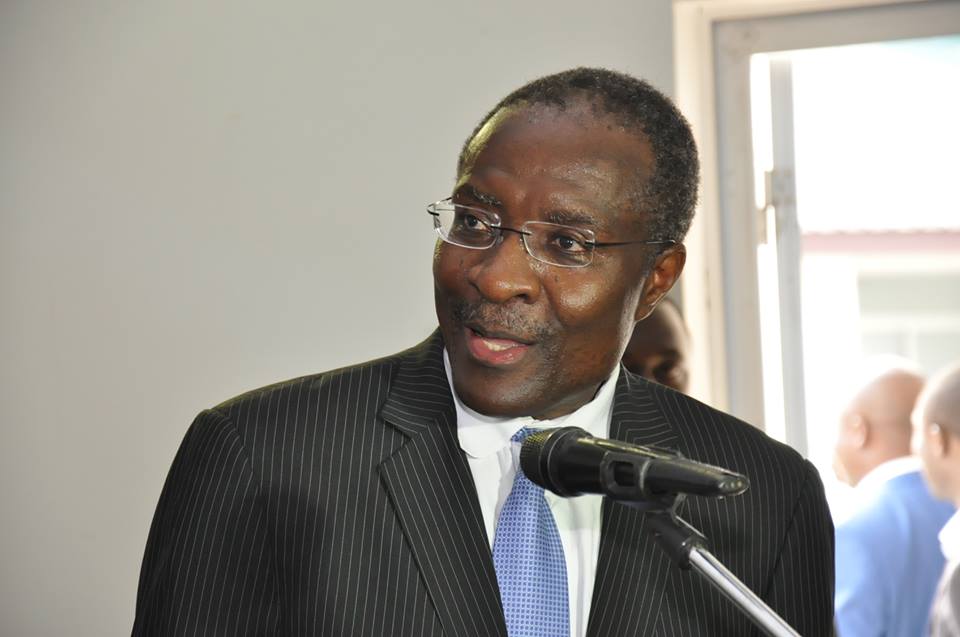 Camerooon is sitting on a powder keg waiting to explode if there is no
significant change in direction ,says Dr Chris Fomunyoh
Camerooon is sitting on a powder keg waiting to explode if there is no
significant change in direction ,says Dr Chris Fomunyoh
Cameroon is like a powder keg waiting to explode if urgent solutions are not
found to the multiple crisis plaguing the country, says Dr Christopher Fomunyoh
Senior Associate for Africa and Regional Director at the Washington, DC based
National Democratic Institute.
Speaking in an exclusive interview with PAV, Dr Fomunyoh says there is an urgent
need for a credible platform that would allow for the legitimate grievances of
Anglophones to be addressed head on and resolved.
"As I have said consistently since the beginning of the conflict, the only way
out is going to be through a negotiated resolution with third party
facilitation, given the hatred and mistrust that now exists among the
belligerents, and between sizeable chunks of the Anglophone population at home
and abroad and the central government of President Paul Biya," Fomunyoh charges.
The losses, pain and fear or trauma under which the affected populations live
will definitely not be alleviated by further killings and atrocities, not by
bayonets and bullets; but by genuine, inclusive and mediated comprehensive
peace talks that will get to the bottom of the grievances and bring
agreement on solutions with which these populations can identify, says Fomunyoh.
It is extremely disappointing and sad that many of today's African leaders are
failing us, and even some of the good leaders are going along with complicit
silence, Fomunyoh says in reaction to a report from the Norwegian Refugee
Council indicating that the top 10 displacement crises in the world are in
African countries.
In the interview which also harps on post Biya succession scenarios, his own
perceived political ambitions, and other developments across Africa, Dr Fomunyoh
sees hope in the younger generation as 60 percent of the population is under 25
years old, and yearning to find a better and more meaningful life and better
opportunities for themselves, devoid of the prejudices, wickedness and
malpractices of the past.
The Norwegian Refugee Council (NRC) just released a report that lists the
top 10 displacement crises in the world, and all are in African countries.
As a pan africanist and someone who crisscrosses the continent regularly for
peace, democracy and good governance, how do you react to such a
classification?
I'm devastated! You can't argue with the list which calls out DR Congo, Burkina
Faso, Cameroon, South Sudan, Chad, Mali, Sudan, Nigeria, Burundi and Ethiopia in
that order. The list is based on hard facts and therefore very painful to see.
It speaks to the reality of the multiple conflicts currently ongoing on the
continent, and that are impacting heavily already marginalized and vulnerable
populations, especially in rural areas and out of sight of political elites and
diplomats who live in capital cities. On the one hand, this list of ongoing
conflicts and internal displaced persons points to poor governance and the
failure of national governments and our regional organizations to prevent or
resolve conflicts and guarantee the safety, security and wellbeing of citizens;
at the same time, it is testament to the fact that the rest of the world and
multinational organizations such as the United Nations system seem to have
closed their eyes to the havoc occurring in many of the conflict zones across
the continent. It is extremely disappointing and sad that many of
today's African leaders are failing us, and even some of the good
leaders are going along with complicit silence. Every
African and genuine friend of the continent should be revolted by these reports
and statistics on conflicts, misery and suffering. For a continent that is so
rich in mineral resources and human capital, we are better than being perceived
as the permanent poster child for unresolved conflicts and violence that
displace millions every year.
Why do you think regional organizations such as the African Union and
even the subregional bodies like ECOWAS, SADC, IGAD are not taking on these
challenges?
Excellent question! Some of the subregional organizations such as ECOWAS are
doing what they can to pressure leaders in countries such as Mali, Burkina Faso
and Guinea to perform better; SADC is active in Mozambique and Eswatini, and its
interventions may still produce positive results; but the African Union itself
is beginning to lose its luster as the enthusiasm and hopes that accompanied the
organization?s launch in 2001 wither. Many of us now look back with nostalgia at
the African Union of former Malian president Alpha Oumar Konare when shared
values and human security were guiding principles. It is regrettable that the
era when leaders such as Nelson Mandela, Thabo Mbeki, Olusegun Obasanjo,
Nicephore Soglo, Ellen Johnson Sirleaf, Konare and others talked about the peer
review mechanism and the African Renaissance now looks so
distant.
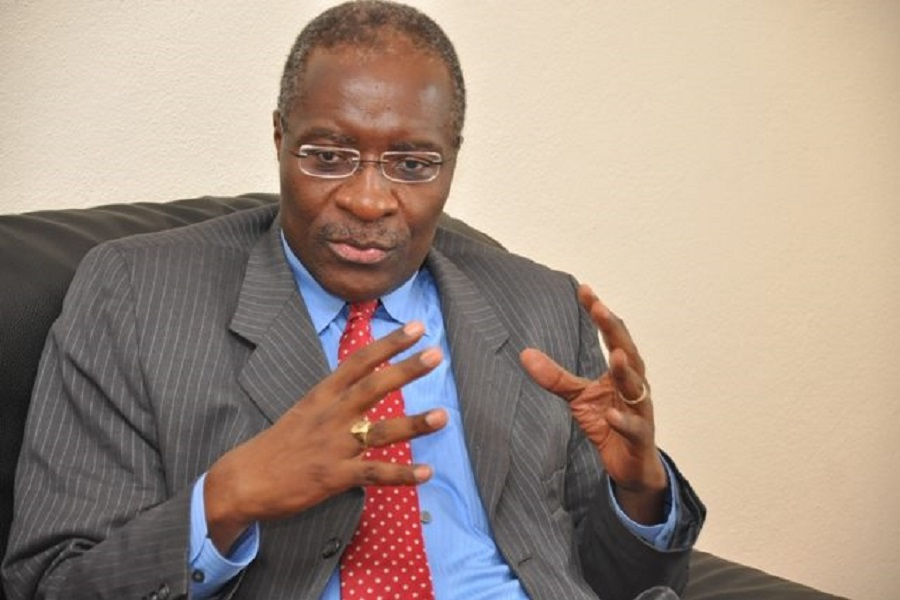 On the crisis in the North West and South West Regions, the only way out
is going to be through a negotiated resolution with third party
facilitation, says Dr Fomunyoh
On the crisis in the North West and South West Regions, the only way out
is going to be through a negotiated resolution with third party
facilitation, says Dr Fomunyoh
Your home country of Cameroon just celebrated 50 years of the unitary
state with some pomp, despite occupying third place on the NRC list. What's
your reading of the socio-economic and political shape of the country in the
wake of that 50th anniversary celebration?
Cameroon is in very bad shape today on multiple fronts as it experiences
overlapping and suffocating security, political and socio-economic crises. There
are too many ongoing conflicts and inconsistencies, including around the May
20th date itself. For some Cameroonians, the abolition of the name the 'United
Republic of Cameroon' by decree in 1984 took a lot of the veneer off the
commemoration of a unitary state. Still others, especially among the
English-speaking population, question the legality of the referendum of 1972,
that put an end to the Federation and brought about the unitary state. Thus is
my view, unlike the symbolism of unity that May 20 should hold in Cameroon, that
day has come to crystalize the contradictions of our history and destiny. On top
of that, the country is embroiled in an ongoing five year old armed conflict in
the North West and South West regions or the former Southern Cameroons; Boko
Haram incursions continue in the Extreme North region around the Lake Chad
basin; and insecurity persists on the eastern border with a restive Central
African Republic. Add to that internal socio-political tensions and
polarization, and the country looks like a powder keg that could explode at any
time.
So, is it true that the May 20 event was very chilly or literally
nonexistent in many parts of the English speaking North West and South West
Regions of the country; and, if so, what should be the take home message
from this?
Since 2016, the North West and South regions of Cameroon or what was Southern
Cameroons prior to reunification in 1961, have been suffering under grievances
related to the marginalization of populations from these areas over the 60 years
of experimentation with nation building. Unfortunately, by 2017, the crisis,
initially led by lawyers and teachers, morphed into an armed conflict that has
left thousands dead, hundreds of villages burned, close to one million displaced
persons, about 70,000 of whom are refugees in neighboring countries, and close
to 800,000 children who have been denied access to education. Under such
circumstances, and until there's a negotiated end to the conflict, it is not
humanly possible to have people out feasting on a day that many see as the
source of their pain and suffering, or political ills and misfortunes. Turnout
at public events was generally low, especially as armed non-state groups had
declared and actually enforced lockdowns in many communities in those regions.
The conflict in the North West and South West Regions has taken an
alarming toll on human life and property, as things stand now what do you
see as a way out?
As I have said consistently since the beginning of the conflict, the only way out
is going to be through a negotiated resolution with third party facilitation,
given the hatred and mistrust that now exists among the belligerents, and
between sizeable chunks of the Anglophone population at home and abroad and the
central government of President Paul Biya. There's an urgent need for a credible
platform that would allow for the legitimate grievances of Anglophones to be
addressed head on and resolved. The military option which many of us decried
from the beginning has not only failed; it has generalized and normalized the
kind of violence and atrocities from both sides that we have seen in the past
five years. The losses, pain and fear or trauma under which the affected
populations live will definitely not be alleviated by further killings and
atrocities, not by bayonets and bullets; but by genuine, inclusive and
mediated comprehensive peace talks that will get to the bottom of the
grievances and bring agreement on solutions with which these populations can
identify.
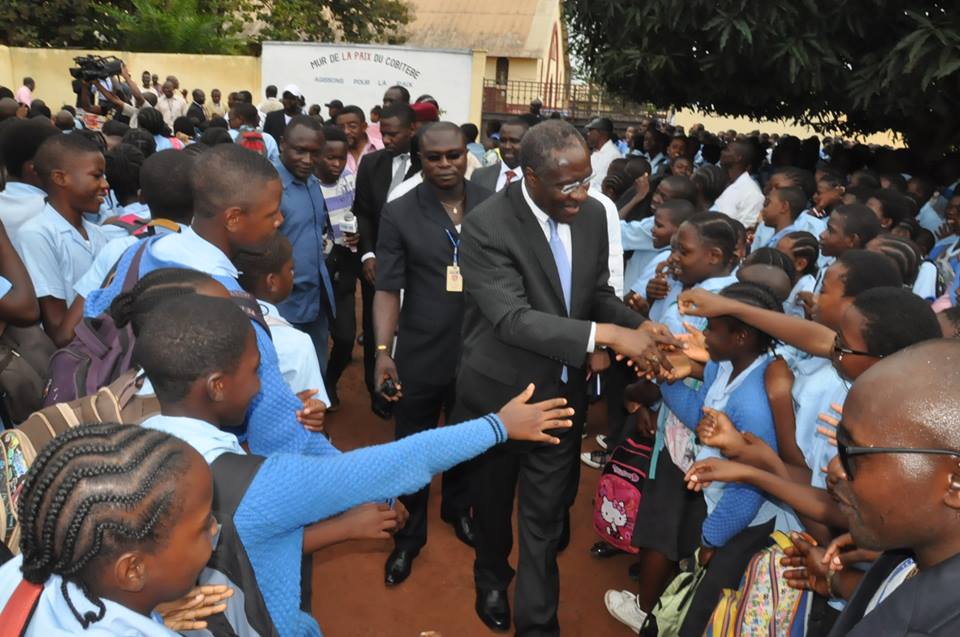 My greatest hope is in the younger generation yearning to find a better
and more meaningful life and better opportunities for themselves, says Dr
Fomunyoh
My greatest hope is in the younger generation yearning to find a better
and more meaningful life and better opportunities for themselves, says Dr
Fomunyoh
President Paul Biya has been in power for 40 of the 50 years of the
unitary state, how much of liability or solution is he or could be in the
quest for solutions to the conflict?
At close to 90 years old in a country where the median age is 19 years, and with
40 years as president, Paul Biya has long since missed the opportunity to lead
Cameroon out of the conflict; yet the highly centralized jacobin-like system of
government that Biya has put in place is such that no one else makes decisions
in Yaounde except him. So, he needs to awaken from slumber to the realization
that people have died in the thousands, lives are being destroyed daily, a
sizeable percentage of Anglophones believe that he and his regime are bent on
destroying their educational and legal systems, and their culture and way of
life, and so this conflict needs to end immediately.
Interviewed recently after a visit to Cameroon, the former apartheid
chief negotiator Roelf Meyer said 'genuine and inclusive dialogue could be
the only way out of the conflict.' What role do you think respected
international actors such as former minister Roelf Meyer could play in
bringing an end to the conflict?
Many Cameroonians were quite touched that an African leader like former South
African minister Roelf Meyer would make the time to visit Cameroon and pay
attention to the armed conflict where other Africans have been so indifferent
and insensitive to this conflict. Roelf Meyer is a global leader of great
stature given the prominent role he played in his home country to bring an end
to apartheid and facilitate the release of Nelson Mandela, and even thereafter
his role in championing the cause of a new constitution for a new and democratic
South Africa. Many countries around the world reach out to Roelf Meyer regularly
to elicit his advice and wise counsel in tackling issues of conflict and
difficult transitions. In fact, shortly after his Cameroon trip, Mr. Meyer flew
to Bangkok, Thailand for consultations on Myanmar (Burma). There's absolutely no
doubt in my mind that he and others of his caliber can help us in Cameroon find
peace and justice, and an end to this senseless war. Were Roelf Meyer to step
forward, his impeccable credentials would make it difficult for those who have
been opposed to negotiations to continue to block the process; alternatively, it
would become more obvious who wants the war and atrocities to continue, and
hopefully that will make it easier for such individuals to be held accountable
for their actions and their profiteering from the crisis.
Back to President Biya, the issue of succession is looming large for
obvious reasons. Can you shed light on the succession mechanisms in place
and how important it is for the country to get it right?
I can understand the fretting and hand wringing around Biya's presidency, because
historically, as illustrated by the examples of long serving African presidents
such as Houphou�t Boigny in C�te d'Ivoire, Omar Bongo in Gabon,
Gnassingbé Eyad�ma in Togo, and Muammar Khaddafi in Libya, the death of
long serving leaders portend chaos and confusion as various factions jockey for
position, and some seek to replace him amidst a panoply of grievances that could
boil over once the lid is off the simmering pot. As the oldest president in the
world, Biya has kept the disparate threads together during his four decades of
rule through old style autocratic methods such as patronage networks, excessive
corruption and the instrumentalization of the military and security services to
squash or repress dissent and extract total loyalty to himself. Article 6 (4) of
the constitution of Cameroon, as amended in 2008, provides that in case of a
presidential vacancy, the president of the Senate assumes the seat for between
20 days and 120 days, during which time he must organize elections for a new
president. However, inherent weaknesses in the country's institutional framework
and fervent calls for major electoral reforms may render this constitutional
option impracticable, given the country's very poor track record on adherence
to, and implementation of its constitution, respect for the rule of law and the
conduct of inclusive, transparent polls under Biya. There has been an outcry for
electoral reform, especially since the last presidential poll in 2018; it is
doubtful that opposition parties and civil society would accept a new
presidential election without substantial electoral reforms.
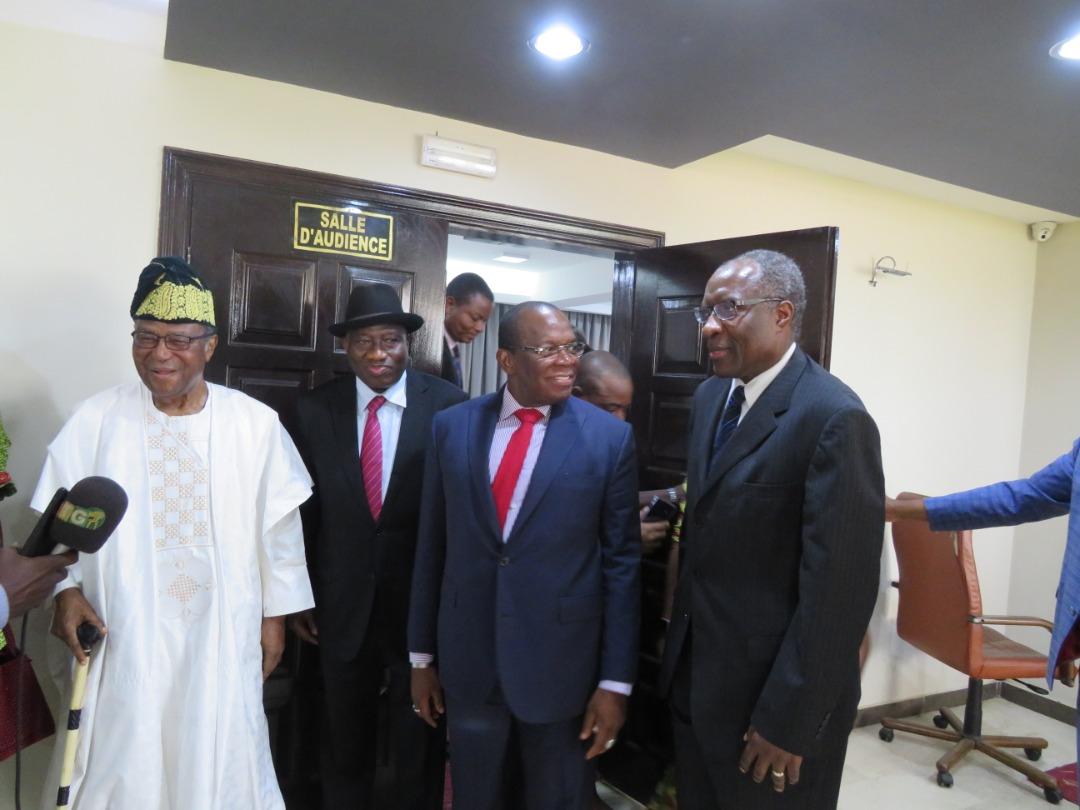 Former Presidents Nicephore Soglo of Benin and Goodluck Jonathan of
Nigeria, with Dr Fomunyoh in Guinea.Succession politics is making a bad
situation worse in Cameroon
Former Presidents Nicephore Soglo of Benin and Goodluck Jonathan of
Nigeria, with Dr Fomunyoh in Guinea.Succession politics is making a bad
situation worse in Cameroon
Looking at some of the names being floated out there as potential
successors to Biya, the impression one gets is that should Biya not be there
today, there are people ready to replace him the very next minute; how
concerned should the country be that the constitutional succession pattern
may not be followed?
It is no surprise that the poor performance of the current regime, gets many
politicians to easily see themselves outperforming the current crop of policy
makers. The sad equation for Cameroon is that many of those most agitated at
this time are themselves midgets and dwarfs compared to their underperforming
team leader. They have to understand, as we say in French, that "ca
ne passera pas!" Over the years, the regime has eliminated
many of its potential rivals, some political heavyweights languish in prison and
others are out of the country. The few that are courageously resisting the
system within the country barely have room to breathe as political space
continues to shrink and their voices are muscled or stifled.
Do you think it would be in the interest of the Francophone majority to
seriously give thought to prospects of the next President coming from the
English-speaking regions as a means of addressing some of the historic
injustices and boosting prospects of a new dawn for the country?
If Anglophones feel marginalized now because of six decades of Francophone
absolute domination, wait until the next generation is told they'll have to
brace themselves for another hand-picked autocratic Francophone president with
zero democratic credentials and perhaps another decade or two of more blatant
injustices and governance malpractices. Even if your question looks surreal for
the time being, there are certain historical facts that can no longer be
ignored. For example, right after independence in 1961, many Francophone
politicians in the Douala area and the Western region actually hoped there would
be new presidential elections and they would back John Ngu Foncha the Anglophone
against Ahmadou Ahidjo. They were disappointed with the arrangement whereby
Foncha accepted to become Ahidjo's Vice president of the Federation without a
new election. Two decades later, prior to Paul Biya becoming president in 1982,
the constitution was amended, and the line of succession tinkered with so Biya
would become the second personality of the country, instead of the Speaker of
the National Assembly S.T. Muna who was an Anglophone. Ten years later in 1992,
in the first competitive multiparty presidential election in Cameroon?s history,
the Anglophone candidate John Fru Ndi obtained his highest vote totals in
regions that included the Francophone West and Littoral provinces at the time
and came close to defeating incumbent Paul Biya. One can therefore posit that
deep down, there is a strong sentiment among even Francophones that a qualified
Anglophone at the helm of Cameroon could more effectively get the country out of
the mess in which it currently finds itself. Of course, while the armed conflict
persists, thoughts like this one look more like an intellectual exercise than
anything else.
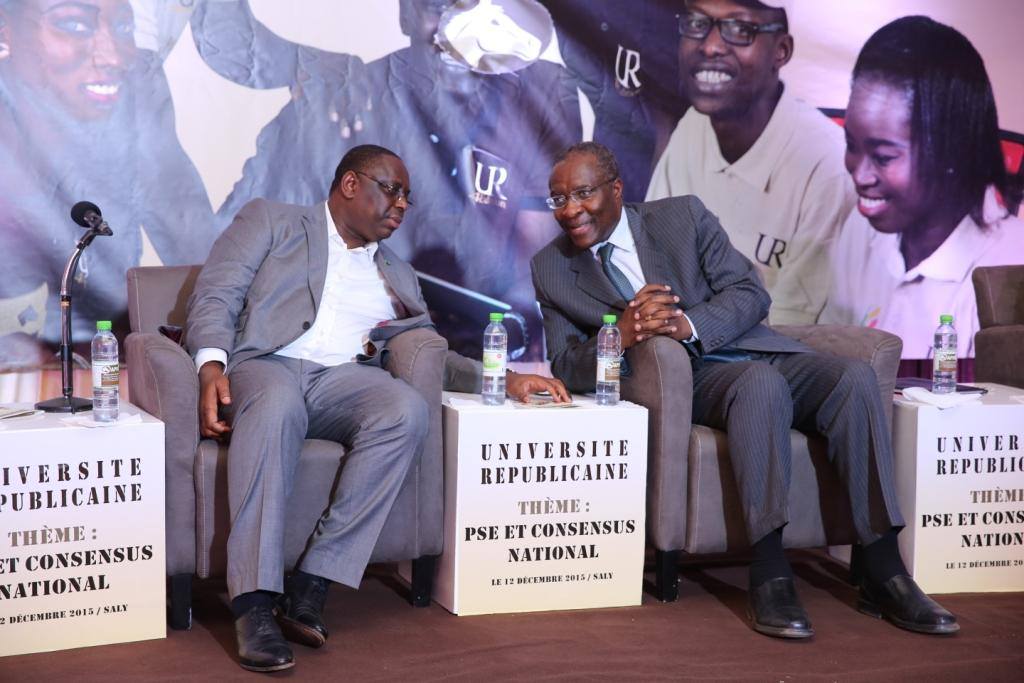 Dr Fomunyoh seen here with Senegalese President Macky Sall remains coy
about his own personal political ambitions
Dr Fomunyoh seen here with Senegalese President Macky Sall remains coy
about his own personal political ambitions
Your own name has been floated during previous election cycles as a
potential Presidential candidate, for all you have done across Africa to
help fashion and polish democracies; have you ever thought of dropping
everything to go help the country rebuild, if called upon?
I'm humbled the way you pose the question. Indeed, it is difficult to have my
experience and the expertise that I've been fortunate to gather over the years,
have a human heart and a good conscience, and sit idly by while your people
perish and languish in misery and despair. It's doubly painful when you realize
that most of the ills that you identified and spoke strongly about in the past
could have been resolved without firing a shot, and that with one's exposure to
the world and international arena, one could lift up one's fellow compatriots
and give them another lease on a decent lifestyle, and reposition one's country
in its rightful place in Africa and the world. My position prior to the 2018
presidential poll was well known in terms of not walking into politicking while
the blood of innocent citizens was being spilled in a senseless war. I do
believe strongly that in life, one must have one's priorities right - that too
is an indispensable aspect of visionary leadership.
A last question on the future of Cameroon, what are your biggest fears
and what gives you hope, will there be a Cameroon after Biya?
Ironically, I have almost no fears left for Cameroon because most of the fears
are already being materialized before our very eyes in terms of how broken,
polarized, fragmented, and divided the country is right now. It couldn't be
worse than we're currently experiencing. The good news is that 'countries don't
die'; individuals and regimes come and go, but the people whose resilience is
quite legendary will pick themselves up and soldier on. My greatest hope is in
the younger generation as 60 percent of the population is under 25 years old,
and yearning to find a better and more meaningful life and better opportunities
for themselves, devoid of the prejudices, wickedness and malpractices of the
past. Also, for the very active group that represents 56 percent of the
population between 15 and 65 years old, I hope they would draw lessons from the
hardships and inferno of the Biya regime and turn the page so we can all work to
put out the fires and begin the healing.
panafricanvisions.com
Dr. Christopher Fomunyoh
Président, The Fomunyoh Foundation
christopher.fomunyoh@tffcam.org
www.tffcam.org
|