|
Resolving The Anglophone Conflict: Not Under Biya's
Presidency: "Paul Biya Will Leave Cameroon Worse Off Than He Took It In
1982," - Dr Christopher Fomunyoh
November, 2021
You may find it a prophetic declaration. It may well be the interview of the
year. It comes from one of the few credible Cameroonian intellectuals and
independent personalities still standing; unafraid of speaking truth to power.
Dr. Christopher Fomunyoh's experience in African affairs is unmatched. He is
Director of the National Democratic, NDI. He puts it audaciously in this
exclusive interview, only to The Voice newspaper: "Paul Biya will leave Cameroon
worse off than he took it in 1982, and therefore owes the Cameroon people,
especially the younger generation, an apology. To him, Paul Biya's style of
governance, approach to dissent and grievances by citizens has exacerbated the
conflict and remain part, not of the solution, but of the problem. With no taboo
subject in this interview, Dr. Fomunyoh duels on the heinous and despicable
killings, even of children; the military option to resolve the Southern
Cameroons conflict; dialogue and negotiations; the role of the Pope and the
Church; the need to end the crisis and the embarrassment of Cameroon's friends
standing idly whilst thousands die in a senseless war.
President Paul Biya just celebrated 39 years in office: how would you
characterize his rule these past four decades? What advice would you have
for him, given where things are in the country right now?
It is a sobering moment to look back 39 years and see what Cameroon has become
since Paul Biya became president in November 1982. I worked for Cameroon
Airlines in Douala at the time and shared in the euphoria and optimism generated
by the hope of a better and brighter future for all Cameroonians. The economy
was doing great - we had three major American Banks operating in the country,
over 30 parastatal corporations were flying the national flag in different
sectors, young University graduates were finding jobs and also creating their
own small and medium-sized enterprises, government officials were being held
accountable, and we bragged about the country being 'Africa in miniature.'
Today, four decades later, that hope has been dashed and we now see a very
fragmented, divided country in which nepotism, corruption, excessive
polarization, and violence prevail. Additionally, for the 20 percent of the
population that is English speaking or inhabitants of former British Cameroons,
it has been a long rough ride of toiling and tears, culminating in the bloodshed
and civil strife of the past five years. I hope President Paul Biya looks at his
own balance sheet and realizes he will leave the country worse off than he took
it in 1982, and therefore owes the Cameroon people, especially the younger
generation, an apology.
Regarding the ongoing conflict in the North West and southwest regions,
an increasing number of Francophone Cameroonians - intellectuals and
ordinary citizens - are becoming very vocal about the costly war situation.
They are critical of the way the government is handling the conflict. What
is your interpretation of this trend?
Many Francophones have been quite vocal right from when Anglophone lawyers,
teachers, and students were maltreated in 2016. Some spoke out too when the
peaceful civil strife morphed into an armed conflict in 2017. With time, upon
learning more about the history of British Southern Cameroons now divided into
North West and South West regions, an increasing number of Francophones have
come to a better understanding of the legitimacy of the grievances raised. I
remember the opinion piece and interviews in 2017 by former minister David
Abouem-A-Tchoyi, the only Cameroonian to have been governor of both of the two
regions, and multiple interviews and declarations by individuals such as
Dieudonne Essomba, Patrice Nganang, Barrister Tsapey, Emmanuel Kougne, and
various spokespersons of many opposition parties. I believe many Francophones
recognize the grievances and marginalization decried by Anglophones, although
they would rather the issues be resolved politically than through armed
conflict.
At the opening of the current session of the National Assembly last
Wednesday November 10, Hon. Speaker Cavaye Djibril spoke about the conflict
and asked Internally Displaced Persons (IDPs) and traditional chiefs from
the North West and South West regions to return to the region. What do you
make of that?
Finally, finally, it's taken Speaker Cavaye Djibril five full years to realize
that thousands of people have been killed in the North West and South West
regions, that a million are now displaced either internally or as refugees and
hundreds of villages and homes have been burnt or destroyed. Had the Speaker
listened to Hon. Joseph Wirba in 2016, or had he sent parliamentary teams of
inquiry into the regions all these five years or himself visited some of the
areas, perhaps he would speak with more credibility on the matter. The Speaker's
passivity, insensitivity, and indifference since the crisis began in 2016 make
his words ring hollow, and he should be reminded that IDPs, traditional rulers,
and others from the North West and South West love their families and home
communities, but can't return to the regions for some because the conflict is
still ragging, and for others because there are no homes to return to.
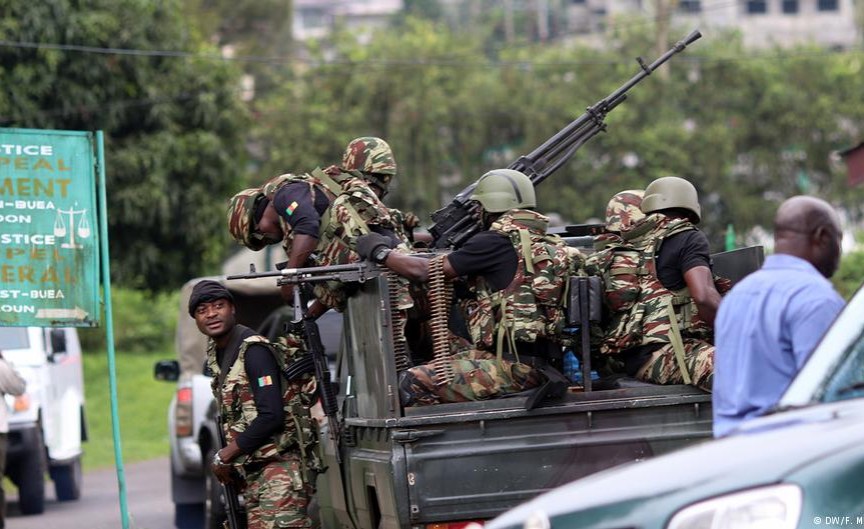
Cameroonian soldiers accused of killing civilians in the troubled
anglophone region
The government is pursuing a military campaign to end the conflict. What
is your assessment of the option of arms to resolve the conflict? Is there a
military solution to this conflict? So what should president Paul Biya do to
save Cameroon?
As I have said repeatedly since the beginning of the armed conflict in 2017, the
grievances raised by Anglophones or former Southern Cameroonians are real and
legitimate, and the conflict cannot be resolved militarily. Aiming for a
military solution is a setup for failure because to win militarily, government
forces will have to kill, but each person killed is a family or village or
community antagonized. And casualties among the police, gendarmes, and military
also mean that families are grieving in pain on both sides of the divide. That
for me is not only unacceptable; it is unsustainable. Even some people in the
government know that too. The right thing to do right now is to cease-fire,
release all prisoners and detainees, and open up facilitated negotiations over
the root causes of the alienation and conflict.
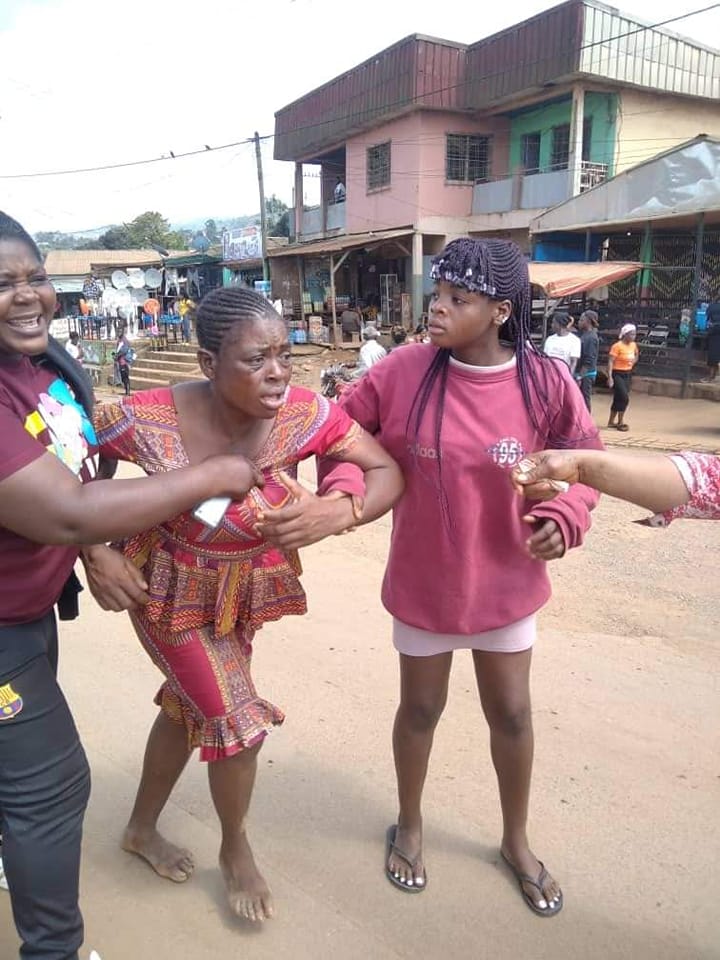
The Mother of Tataw Brandy killed in Bamenda
We are now seeing random killings such as that of Carolouise Enondaile in
Buea, and Tataw Brandy in Bamenda, and homemade explosives in the University
of Buea campus and in public taxis or buses in Buea and Bamenda. Is this
urban escalation inevitable?
We were all still in shock at the killing of four years old Carolouise Enondaile
in Buea on October 14, when we learned of the killing of seven years old Brandy
Tataw in Bamenda on November 12. These random killings against all manner of
victims, including children, are heinous and despicable. I cannot express enough
my sorrow and deepest condolences to the bereaved families, and the populations
in Buea and Bamenda, and other parts of the two regions being traumatized daily
by these occurrences. The killing of Carolouise was shocking, and the mob
justice on the gendarme, terrible. Last month it was Buea, and this month
Bamenda; and so when will this cruelty and reckless extrajudicial killings end?
These are telling signs of a society on edge. You may remember in 2018, I warned
that the armed conflict would have a dehumanizing effect on us all, and you can
see today, the loss of life, including of children, civilians, young men, and
people in uniform is fast becoming part of normalcy. We must take concrete
measures to reverse course.
Peace and conflict experts in and outside of Cameroon have expressed
dismay at the world's indifference about the conflict in the
English-speaking regions. Do you share their frustration?
I do. Who would have thought that friends of Cameroon will stand by idly while
thousands are killed in a senseless war? I have seen policymakers wring their
hands hoping the conflict will go away, and others unwilling to speak up for
fear of losing favor or jeopardizing other interests. That is truly immoral
because, after the genocide in Rwanda in 1994, many Africans took the 'never
again' international proclamation and the responsibility to protect doctrine
seriously. Even the recent 'silencing the guns' initiative by the African Union
hasn't been felt in the organization's response to this conflict.
This conflict initially started on a low scale of peaceful protests when
pent-up anger exploded over the treatment of Anglophones in this union with
francophone Cameroon. Does the embrace of force by both sides mean that
dialogue and a peaceful resolution of the conflict are no longer
possible?
No, we cannot give up on dialogue. Dialogue and negotiations are inevitable given
the grievances that are now being embraced even by children of primary school
age and regular citizens in urban centers and rural areas. People will not
forget the pain and suffering they are currently experiencing, and the only way
to get their buy-in for a different future is to provide an alternative platform
through which their grievances can be addressed.
But two years after the government convened a Major National Dialogue to
address the anglophone grievances and to end the conflict, why do you think
peace has not returned?
There are obvious differences between those that saw the Major National Dialogue
as the silver bullet that would resolve all matters immediately, and many of us
who felt that more needed to be done to have a credible and inclusive process.
Given that the conflict drags on even two years later, we were proven right. In
short, peace has not returned as killings and atrocities continue because those
that hold arms and their backers feel that their grievances have not yet been
fully addressed. There are outstanding process issues in terms of who was at the
table during the Dialogue, and substantive questions in terms of what issues
were debated and what innovative responses were adopted. People are still
yearning for their voices to be heard and their dignity and sense of belonging
to be restored.
What role do you think the church has to play in the crisis?
In a conflict situation, those that advocate for peace and social justice tend to
look around for impartial and respected interlocutors that can speak on behalf
of the downtrodden and most vulnerable among us. Churches and religious leaders
are peacemakers par excellence; and, if courageous enough to speak truth to
power, could be in a strong position to counter the warmongers and those that
believe might is right.
Alongside the British Lord Alton of Liverpool, you recently called on the
Vatican to mediate in the conflict. Now, with the numerous sex scandals
rocking the Catholic Church, do you think the Catholic Church still has the
moral standing to be a respected neutral or arbiter?
In fact, the appeals that Lord Alton and I put forward through the Independent
Catholic News outlet were directed at the Vatican as a global moral institution
and not to individual members of the Catholic Church. The Vatican has
credibility in this country, and Cameroonian authorities will answer the Pope's
call at any minute. Priests and Bishops, especially in the conflict zones have
been quite vocal about their concerns. They live the insecurity on a daily basis
and can speak to the atrocities, suffering, and hardship in the communities they
serve. We need a credible voice to call out the hardliners on both sides so the
bloodshed can end and Cameroonians can stop killing each other.
If you met the Pope in an elevator, what would be your one-minute pitch
to him, in regards to recruiting the Church to mediate the
dialogue?
I would say, "Holy Father, in your quest for peace and justice around the world,
can you speak out for Cameroon where 20 percent of the population now faces an
existential threat to its belonging due to an armed conflict that has cost
thousands of lives, close to one million displaced either internally or as
refugees, and where close to four million or 50 percent of the population are
now at risk of famine in this 21st century? Can you lead the world in saying
'never again' to a senseless war in which killings and atrocities abound?"
Given your experience of over two decades working for the National
Democratic Institute and your background in Law and Political Sciences, with
academic degrees from Yaounde and other prestigious universities like
Harvard and Boston in the United States, could you resolve this Crisis if
tasked to do so?
A crisis of this magnitude cannot be resolved by one individual, but there's no
doubt in my mind that I could make a substantive contribution to its resolution
under the right circumstances and alongside other well-intentioned individuals
and social and political actors. That is why, on several occasions, I have made
suggestions on steps that could be taken to bring the conflict to an end and to
address the root causes. Certain conditions would have to be met, a number of
confidence-building measures would have to be taken and all parties must be open
to speaking frankly about the hard facts and difficult questions that now divide
us.
What would be your roadmap for an end to this armed conflict? What are
your expectations? What outcome do you envisage?
First and immediate ceasefire and cessation of hostilities, a release of
political prisoners and detainees, a stop to arbitrary arrests, harassment, and
extrajudicial killings, agreement on a neutral third-party facilitator who can
shepherd the negotiations among the warring parties or factions, a review of the
rules of engagement for security service still deployed in the two regions, and
various confidence-building measures that can create an enabling environment for
meaningful dialogue on the issues at stake. In the past five years, the conduct
of this war has engendered very hard feelings of bitterness, disaffection, and
disenchantment within Anglophone communities, and any agreement that is arrived
at in the course of a negotiated process would have to be sold back to the
population to get their buy-in. I am struck by various surveys of Anglophones
that show that a sizable segment of our people wants out of the current
political dispensation, and all efforts towards peace and social justice would
have to take that into consideration.
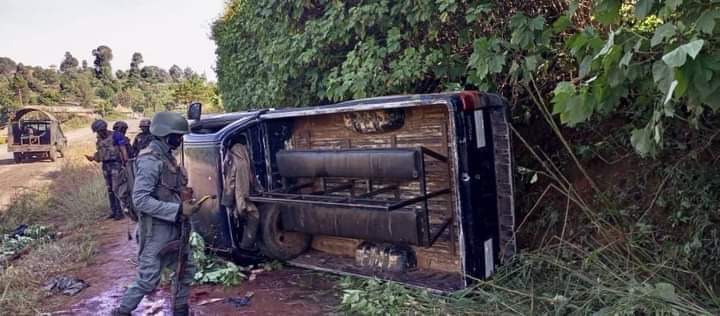
Ambazonian forces ambush Cameroon government forces kill many
soldiers
If you had all the Ambazonian factions around the table, what would you
tell them - before the negotiations?
The task here would be to place before them confidence enhancers that assure
everyone their voices will be heard and their safety guaranteed and then walk
them through a road map with viable solutions or alternatives to what it is they
want.
How is this conflict perceived within the National Democratic Institute
for International Affairs, an organization that works to strengthen and
promote democracy and good governance around the world? Is your Institute
collecting any data on the Crisis?
While NDI is not collecting data on the conflict, I know of other credible
organizations and initiatives that are doing so, and that are ready to share
their data and information with appropriate authorities and international
organizations at the right time. I can assure you that contrary to the impunity
that seems prevalent right now, there will come a time when individuals and
entities will be held to account for crimes and atrocities committed during this
conflict.
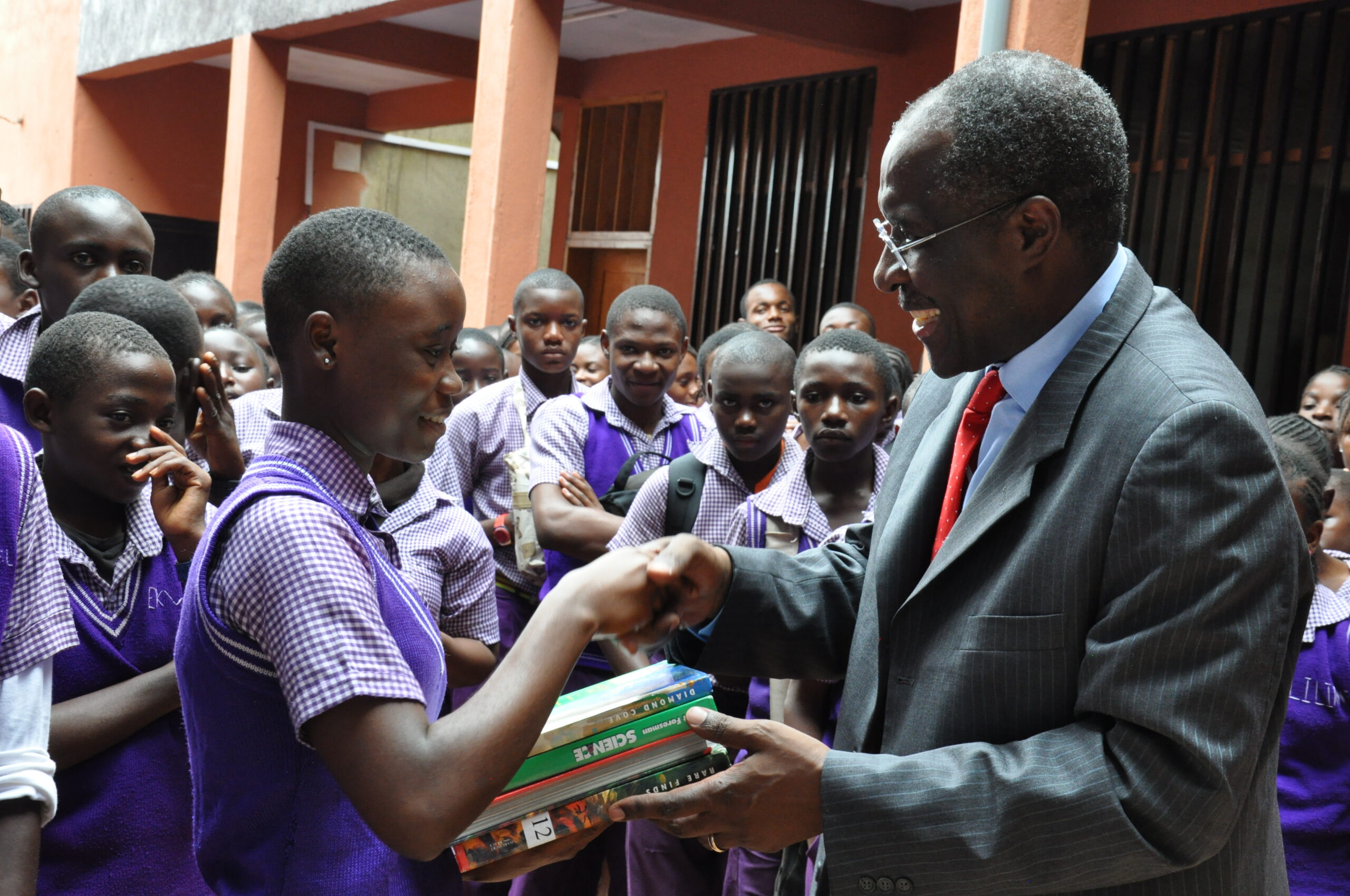
22 Years At The Service Of Humanity For The Fomunyoh Foundation
What have been your areas of focus and your personal efforts so
far?
Personally, and through the Fomunyoh Foundation (www.tffcam.org) I have focused
as much as I can, and alongside many other individuals and civil society
organizations, on assisting internally displaced persons within the country and
refugees in various camps in neighboring Nigeria. It is heartbreaking to see
what this conflict has done to people who, until recently, lived decent lives.
It is even shocking when an organization such as the World Food Programme warns
about the possibility of close to four million people at risk of famine in the
North West and South West, knowing that these regions now experiencing conflict
used to thrive on agriculture and were among the breadbaskets of the country. I
have also tried to raise awareness among African leaders and internationally on
the deaths and destruction and risks of further escalation of this conflict. I
hope all of these efforts will bear fruit soon.
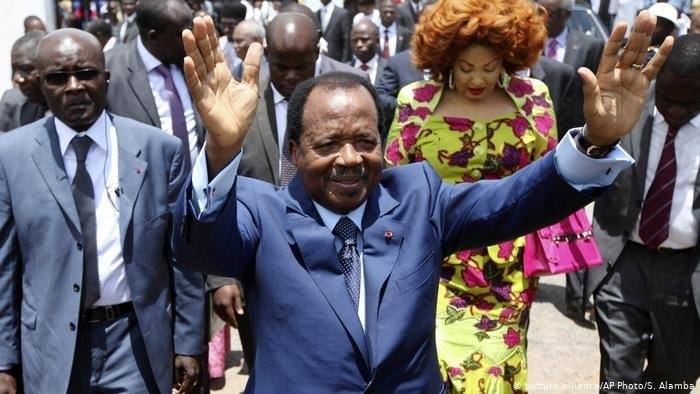
President Paul Biya
What future do you see for Cameroon in the medium to long term?
Watching the developments of the past five years, it is extremely difficult to
keep one's optimism and not come to the conclusion that this conflict will not
be resolved under Paul Biya's presidency. Biya's style of governance and his
approach to dissent and grievances by citizens has exacerbated the conflict and
remain part not of the solution, but of the problem. Even today, some government
officials still speak and conduct themselves as if this country hasn't seen
enough bloodshed in four years. It's also disheartening to realize that the
prime minister who seems to be the most desirous of peace and an end to the
conflict doesn't have much wiggle room within this administration to make a
difference. On the contrary, one sees dwarfs and Lilliputians positioning
themselves to be the next leaders of this country whereas they have neither the
heft, the knowhow, background or credibility to bring this conflict to an end
and chart a new pathway forward. Oftentimes though, the Good Lord has his own
plans and we may wake up to surprises that move things in a more positive
direction. Even then, a lot of heavy lifting and transformational shifts will be
required to give people back their dignity and relaunch the country on a path of
peace and reconciliation.
panafricanvisions.com
Dr. Christopher Fomunyoh
Président, The Fomunyoh Foundation
christopher.fomunyoh@tffcam.org
www.tffcam.org
|